

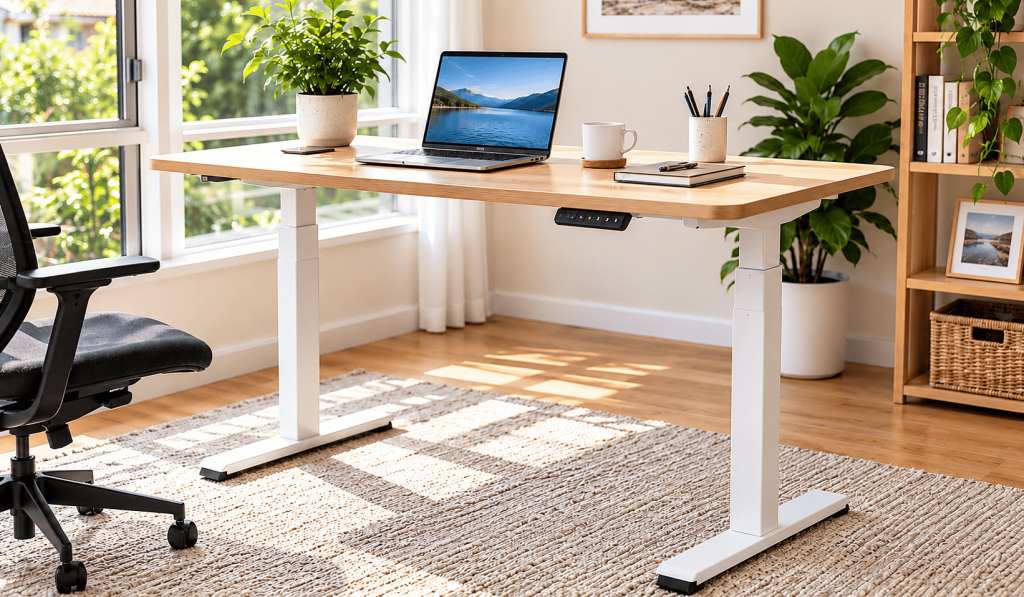
Working from home looks different across Australia these days. Some of us swap between the kitchen bench and a spare room. Others commute a couple of days a week and set up at home for the rest. A standing desk can make that routine feel easier on the body.
A standing desk lifts and lowers, so you can switch between sitting and standing during the day. That small change breaks up long stretches in one position. Plenty of shoppers also like the fresh, flexible feel it adds to a workspace.
Choosing the right one takes a little thought, though. Size, height range and stability all matter, especially in compact flats and shared spaces. This standing desk review walks through the key features, pros and cons, and who it suits best.
Think of it as a friendly checklist. By the end, you will know whether a standing desk is worth buying for your home office. 🪴
Affiliate disclosure. As an Amazon Associate, BrowseBetter earns from qualifying purchases at no additional cost to you. This helps support our content and allows us to continue providing helpful product recommendations.
Standing Desk Review: Why It Is Worth Considering
A standing desk is an adjustable-height desk that moves between sitting and standing positions. Most models use an electric motor and a simple control panel. You press a button, and the desktop glides to your preferred height.
The big appeal is flexibility. You can start the morning seated, stand for a video call, and sit again after lunch. During a warm Aussie summer, a lighter standing posture can also feel less stuffy than slumping in a chair for hours.
This product category also stands out because it suits many setups. A good standing desk holds a laptop, a monitor and a few everyday bits without crowding the room. For many shoppers, that mix of comfort and practicality is the main drawcard. ✨
Key Feature 1 — Adjustable Height Range
Check the height range first. Many models adjust from roughly 70 cm to 120 cm. That range suits most adults and leaves room for a footrest or a taller monitor arm.
Taller and shorter users should compare the minimum and maximum heights before buying. Your elbows should sit at about 90 degrees when you type.
Key Feature 2 — Stable Frame and Motor
Stability matters more than most people expect. A wobbly desk gets annoying fast, especially when you type or use a mouse.
Dual-motor frames usually feel steadier at full height. Single-motor frames still work well for lighter setups, and they often cost less.
Key Feature 3 — Desktop Size and Weight Capacity
Desktop width commonly sits between 120 cm and 160 cm. A 120 cm top suits a compact corner. A 140 cm to 160 cm top gives you room for a dual-monitor setup.
Weight capacity often lands around 70 kg to 100 kg. That comfortably holds a laptop, a monitor and a morning coffee. ☕
Key Feature 4 — Memory Presets and Cable Management
Memory presets save your favourite heights. Press one button, and the desk moves to your sitting or standing position.
Cable trays and grommet holes keep cords tidy. A neat desk makes the whole space feel calmer.
How to Measure Your Space Before You Buy
Grab a tape measure and check three things. Start with the wall width where the desk will sit. Next, check how much depth you can spare without blocking a walkway. Finally, measure the door and hallway the box must travel through.
Leave about 10 cm of breathing room on each side of the desktop. That gap stops the desk from catching on a wall or cupboard as it rises. A quick sketch on paper saves a lot of returns later. 📐
Simple Ways to Get More From Your Standing Desk
Ease in gradually. Aim for 15 to 20 minutes of standing a few times a day, then build up as it feels comfortable. A cushioned anti-fatigue mat can make longer stints kinder on your feet.
Keep your monitor at eye level and your keyboard at elbow height. A phone reminder every hour nudges you to change position. Short walks count too, so stretch your legs whenever you can.
Is a Standing Desk a Good Fit for Australian Homes?
Many Australian homes mix open-plan living with small spare rooms and sunrooms. A standing desk adapts to all of them. You can tuck it into a corner or float it near a window.
Warm weather deserves a thought as well. Place the desk where a ceiling fan or breeze reaches you. Add felt pads under the feet if you have timber floors, so the legs stay quiet and scratch-free. 🌞
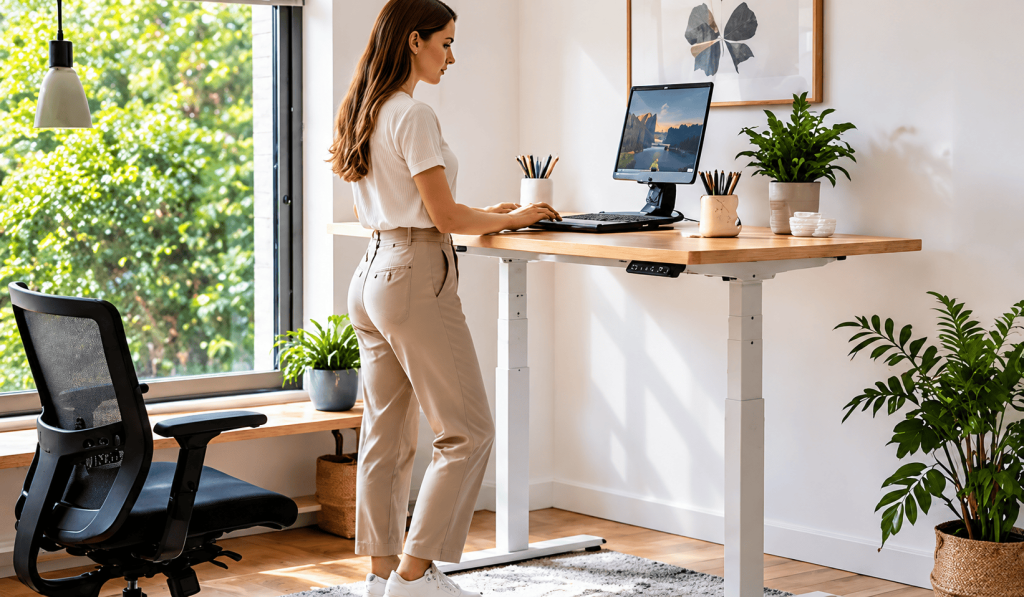
Person working at an adjustable standing desk in a sunny home office
What We Like About a Standing Desk
- 🧍 Easy switching between sitting and standing through the day
- 🎛️ Quick one-touch height changes with memory presets
- 🏠 Fits neatly into spare rooms, studies and corners
- 🔌 Tidy cable management for a calmer workspace
- 💪 Sturdy frames that hold a laptop, monitor and more
- 🌿 Flexible comfort that suits long work-from-home days
Things to Consider Before Buying a Standing Desk
- 🔧 Assembly can take a little while, so a second pair of hands helps
- 📏 Measure your room and doorways first, since the boxes arrive large and heavy
- 💸 Dual-motor frames and wider tops usually cost more, so set a budget early
- 🔊 Motors make a gentle hum, which may matter in shared spaces
- 🦶 Standing all day is not the goal, so plan to mix sitting and standing
Who Is a Standing Desk Best For?
A standing desk suits anyone who spends hours at a computer each day. Think work-from-home professionals, students, gamers and creators. If your routine involves long calls or study sessions, the height changes can add welcome variety.
Budget matters too. Entry-level models cover the basics, while premium ones add dual motors and bigger tops. Setup is simple for most people. You need a basic tool kit and a little patience.
Best For Work-From-Home Professionals
Hybrid workers in Sydney, Melbourne, Brisbane and beyond often rotate between home and the office. A standing desk gives them a flexible base for the home days. It also pairs well with a monitor arm and a good chair.
Students and hobbyists benefit as well. A spare-room desk can switch from study to gaming in seconds.
May Not Be Ideal For Very Small Spaces or Tight Budgets
A standing desk may feel bulky in a tiny studio or a shared nook. Measure the floor space and the room to move around. Compact 100 cm to 120 cm tops can help in smaller rooms.
Shoppers on a tight budget might prefer a fixed desk with a laptop riser instead. That option still lets you stand for short stints.
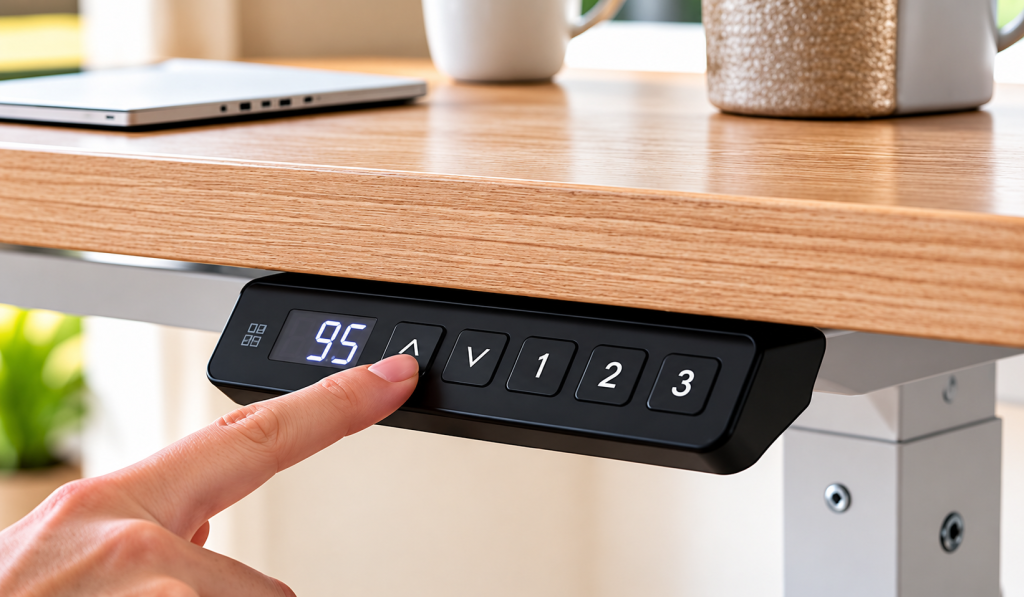
Close-up of standing desk control panel with height controls and memory buttons
Final Takeaway: Is a Standing Desk Worth Buying?
A standing desk is worth considering if you spend long hours at a computer and want more flexibility. The main reason to buy is simple. You can change position through the day without leaving your workspace.
Keep one thing in mind. Size, stability and budget decide how happy you will be. Measure your space, check the height range and choose a frame that feels solid.
For work-from-home professionals, students and creators, this standing desk review points to a practical, comfortable upgrade. Shoppers with tiny rooms or tight budgets may prefer a cheaper starter option. Overall, a well-chosen standing desk is a balanced, sensible buy for most home offices. 👍
Thanks for reading! If this guide helped, share it with a friend who is setting up a home office. 😊